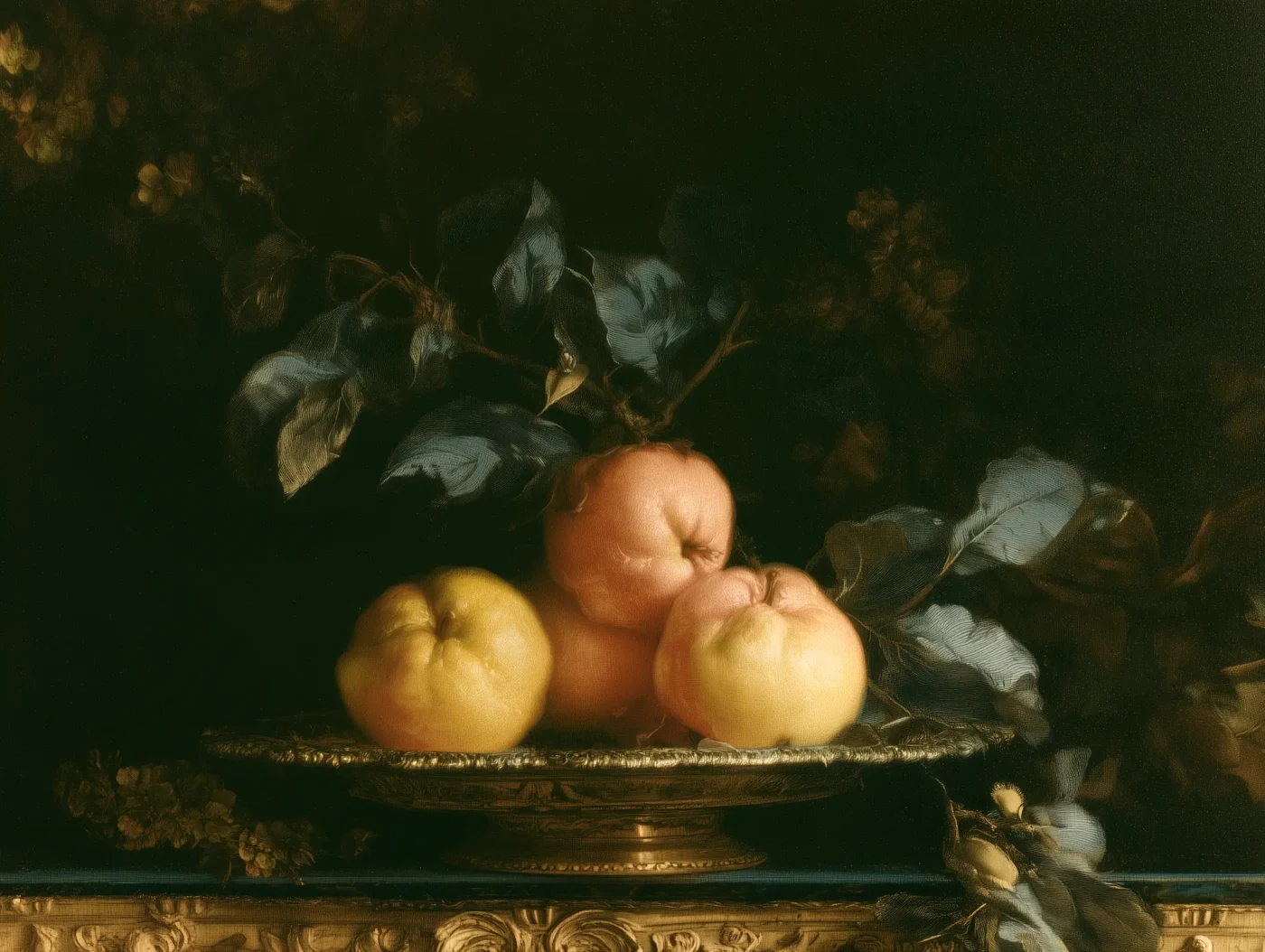
I recently came across some beautiful quinces at the market and brought a few home, thinking it was finally time I tried making pâte de coing, the traditional French quince paste. I’ve always had a fondness for pâtes de fruits, those little fruit confections you find in traditional French chocolate shops. They remind me especially of Christmas when I was little, and the papillotes we would unwrap during the holidays: chocolates and sweets wrapped in colorful, fringed paper, often with a little message tucked inside.
Lately, I’ve also become rather curious about old French pastry books. There is something fascinating about discovering recipes that were once familiar, sometimes even everyday, but that we rarely think to make anymore. Some require an astonishing amount of work; others are surprisingly simple. And every so often, I come across one that makes me wonder why we ever stopped making it.
Quince paste was one of those discoveries. All it requires is quince, sugar, a little water, and patience. No added pectin, no particularly sophisticated equipment. Just the fruit, slowly cooked until the pale flesh turns a beautiful coppery color and becomes thick enough to cut into little squares.
I was especially surprised by the flavor. I knew quince was fragrant, but I hadn’t expected quite so much acidity. The finished paste was tender, delicately tart, and wonderfully fruity, with a much more pronounced fruit flavor than I had imagined. I liked it all the more for that.
A Little French Pastry History
The recipe that inspired me comes from Pierre Lacam, a nineteenth-century French pastry chef whose books I’ve recently been exploring. His version called for 1,125 g of sugar for every kilogram of cooked quince purée. He shaped the paste into little confections, dried them in a warm drying oven for two or three days, then finished them with sugar.
One detail in his recipe particularly caught my attention. Lacam mentions that even quince seeds were once sold to pharmacies and perfumers, where they were used in preparations ranging from eye lotions to bandoline, a product for setting the hair. I find these little glimpses into everyday life particularly charming. They remind me that an old recipe can tell us something not only about what people ate, but also about how they lived.
For my own version, I simplified the method for a home kitchen, using less sugar and spreading the paste into a shallow dish rather than shaping individual sweets. The result was firm enough to cut into neat little squares, yet still wonderfully tender and melting in the mouth.
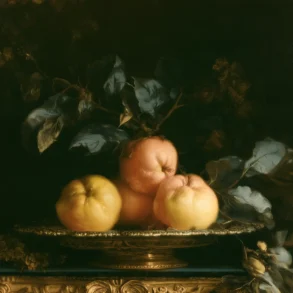
French Quince Paste (Pâte de Coing)
Ingredients
- 1 kg whole quinces
- 200 ml water plus a little more if needed
- 800 g granulated sugar, equal to 80% of the weight of the cooked, drained quince purée (For example, if you obtain 600 g of quince purée, you'll need 480 g of sugar).
Instructions
- Wash the quinces, rubbing away their soft fuzz, and cut them into quarters without peeling or coring them. They can be surprisingly hard, so take care. Place in a saucepan with the water, cover, and simmer for 30–45 minutes, until completely tender. Add a little water if necessary.
- Drain the quinces for 15–20 minutes. Once cool enough to handle, remove the peel, cores, seeds, and any hard pieces. Blend the flesh until smooth, or pass it through a food mill.
- Weigh the purée and add 80% of its weight in granulated sugar. For example, 1 kg of purée will need 800 g of sugar. Mix together in a wide, heavy-bottomed saucepan.
- Cook over medium-low heat for approximately 25–45 minutes, stirring frequently, then almost constantly as the mixture thickens. The paste will gradually turn a beautiful coppery orange. It's ready when it pulls away from the sides of the pan and a spatula drawn across the bottom leaves a clear trail that doesn't immediately close. Be careful of hot splashes.
- Pour into a shallow dish lined with parchment paper and spread to a thickness of 1–1.5 cm. Leave to cool, then cover and refrigerate until firm, preferably overnight. Cut into small squares or diamonds. The paste should hold its shape while remaining tender inside. I prefer not to roll the pieces in sugar; the quince has such a lovely flavor on its own.
A Note on the Sugar
For this recipe, I suggest using sugar equal to 80% of the weight of the cooked quince purée. In my own kitchen, I experimented with a lower proportion of around 65%, which produced a particularly tender, fruity paste with a delicate tartness I loved. You can experiment with the proportion to suit your taste, although reducing the sugar may require longer cooking and will affect the texture and keeping qualities of the finished paste. The 80% proportion is a useful starting point, while my own batch was made with 65%.
How to Enjoy Pâte de Coing
I like it best just as it is, cut into a small square and enjoyed with a cup of tea. It’s also delicious with cheese, especially an aged Comté or a tomme. The quince’s gentle sweetness and acidity are particularly lovely against the richness and slightly salty, nutty flavor of a mature cheese. A few pieces on a small plate also make a lovely offering alongside coffee at the end of a meal.
There is something deeply satisfying about making a confection from just fruit and sugar, especially one with such a long history. What I enjoyed most about this recipe, beyond the result itself, was realizing how little it required: a few fruits from the market, some sugar, an afternoon in the kitchen, and a recipe written more than a century ago. And if you happen to come across a few quinces at the market this autumn, I hope you’ll give this one a try.