
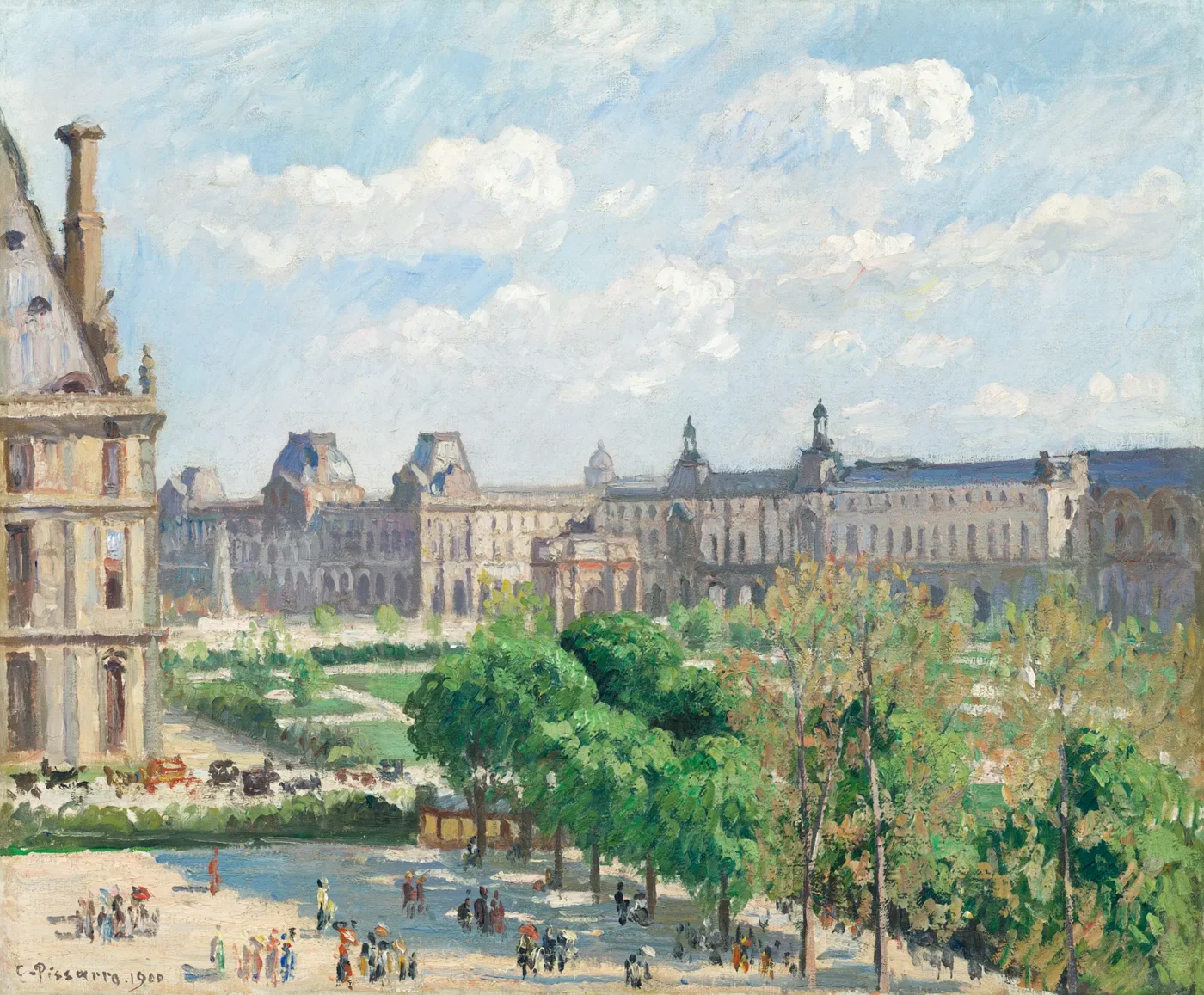
Every so often, I come across advice about what to wear in Paris, and I understand the impulse behind it. Paris has that effect on people. It makes even the most practical among us want to pack a little more carefully: the better coat, the prettier shoes, the dress that will feel right at a café table, on a walk along the Seine, or in the soft light of early evening. There is something about the city that makes one want to rise, gently, to the occasion.
I understand this completely. I have written many such articles myself, not because I believe Paris should be approached as a test, but because there is real pleasure in dressing with intention for a place that has given so many of us an idea of beauty. A well-packed suitcase can make a trip feel easier. A beautiful dress can make an afternoon feel more memorable. A comfortable pair of shoes can give you the freedom to walk for hours. A touch of lipstick, a linen shirt, a trench coat, a silk scarf, these small things can become part of the pleasure of travel.
But lately, I have found myself thinking about the thin line between inspiration and anxiety. When does the pleasure of dressing for Paris become the fear of getting Paris wrong?
This is, of course, a small thing. What to wear in Paris is not one of life’s great tragedies. But small anxieties often reveal something larger about the way women are taught to move through the world: carefully, beautifully, and often with a quiet awareness of being seen.
I thought about this recently while reflecting on how often the question of not looking like a tourist in Paris still comes up: what to wear, what to avoid, how to feel at ease in the city without feeling too visibly out of place. And while I understand the desire to feel elegant, composed, and prepared, I wonder whether we sometimes forget the most important thing.
Paris is not an entrance exam.
It is a city. A real one.
People come to Paris to walk, to look, to eat, to visit, to sit in cafés, to cross bridges, to stand in front of paintings, to take photographs, to discover something they had imagined for years. They come for the light on the Seine, the grey-blue rooftops, the gardens, the old stone buildings, the pastry shops, the museums, the small moments of beauty that made them want to come in the first place. They do not come to prove anything.
And yet, there is a quiet pressure that can sometimes surround the idea of Parisian style, as if being in Paris required more than being present. As if clothes could somehow decide whether one belonged to the city or not. I find this quietly disheartening. Not because style does not matter (I believe it does) but because style, at its best, should make us more available to life, not more afraid of it.
The point of going to Paris is not to convince strangers that you belong there. The point is to be there. To notice. To taste. To walk. To look up. To sit down. To feel, if only for a few days, that beauty can still interrupt an ordinary afternoon.
Having lived in Paris, I can tell you that most Parisians are far less concerned with visitors’ outfits than one might imagine from the outside. Like everyone else, they are busy living their own lives: taking the métro, going to work, running late, thinking about dinner, their children, their emails, the train they are about to miss.
Of course, Paris can be an elegant city. There are wonderful coats, well-cut trousers, beautiful shoes, older women with perfect hair, girls in jeans and ballet flats who seem to get dressed without a moment of doubt. But Paris is also ordinary. Mixed. Practical. Imperfect. Sometimes beautifully dressed. Sometimes not at all. Often somewhere in between. Like every real city.
Paris has a long and beautiful relationship with style, but good taste has never belonged to one city alone. There is taste in Paris, certainly, but also in London, New York, Tokyo, Copenhagen, Milan, Amsterdam, Madrid, Lisbon, and in quiet towns no one writes style guides about. There are elegant women everywhere, and everywhere, too, there are women still finding their way.
This is perhaps why the idea of “not looking like a tourist” has always felt a little narrow to me. It can reduce a rich, human experience to a question of appearance. And the truth is, looking less like a tourist will not protect you from the vulnerability of travel.
On my last trip to Paris, even I, French, French-speaking, and dressed in a perfectly ordinary way, found myself caught off guard by a taxi driver who charged us what he described as a luggage supplement. It sounded official enough in the moment. I hesitated. I was tired. We had bags. I did not want to be difficult. And so, I paid.
Afterwards, it made me smile a little. Not because it was pleasant, of course, but because it reminded me that the vulnerability of travel has very little to do with looking the part. Sometimes it is simply the fatigue of arriving somewhere, the bags at your feet, the wish to trust people, the hesitation before questioning a rule you are not entirely sure of. You can speak the language and still feel unsure. You can know a city and still be surprised by it. You can belong somewhere and still have a moment when you feel like an outsider.
That does not make you foolish. It makes you human.
Perhaps this is worth remembering when we speak about tourists as if the word itself were something to avoid. What is a tourist, really? Someone who does not know everything yet. Someone who looks up. Someone who asks. Someone who takes the wrong street and sometimes finds a better one. Someone who photographs a building locals no longer notice. Someone who is moved by what others have stopped seeing.
To be a tourist is, in a way, to be open. To admit that you are not entirely in control. To be curious, slightly clumsy, available to surprise. It is not a lack of elegance. Sometimes, it is the beginning of wonder.
And perhaps we are all tourists somewhere: in a city we do not yet know, in a language we are still learning, in a new season of life, in a body or a style that no longer feels entirely familiar. I have lived in Paris, then London, and now Amsterdam. Even after several years in Amsterdam, I still sometimes feel like a tourist here. I still notice the reflections on the canals, the quiet courtyards, the particular light on a brick façade, the simple beauty of a bicycle leaning against a bridge.
And honestly, is that so terrible?
Perhaps the fear of looking like a tourist is, at its heart, the fear of being seen in a state of discovery. But discovery is not embarrassing. Wonder is not a lack of taste.
There is nothing wrong with wanting to dress beautifully in Paris. I would never suggest otherwise. There is joy in preparing a suitcase with care, in choosing a dress because you imagine wearing it somewhere lovely, in feeling well dressed in a beautiful city. The question is simply whether we are dressing from pleasure, or from fear.
There is a difference between dressing with intention and dressing to avoid being judged. Dressing with intention asks what will make me feel comfortable, elegant, and present for the life I am actually living. Dressing from fear wonders whether I will look as though I do not belong. One brings you back to yourself. The other quietly pulls you away.
This, to me, is where the conversation around French style can become more generous. Of course, I write about French style. There is something beautiful to learn from the French way of dressing: the simplicity, the restraint, the attention to proportion, the refusal to overcomplicate. But I do not believe French style should ever make women feel inadequate. It can be an inspiration without becoming a prison. Perhaps it is less like a uniform and more like a language. And like any language, it becomes most beautiful when you speak it with your own accent.
So yes, prepare the beautiful suitcase if it brings you joy. Choose the dress. Wear the trench. Bring the lipstick. Pack the shoes you can actually walk in. Think about what you will wear, if thinking about clothes is part of the pleasure for you. But do not let Paris become a place where the pleasure of being there is overshadowed by the fear of being seen as a visitor.
You are allowed to be a tourist in Paris.
And perhaps, more importantly, you are allowed to be yourself there: moved by the city, irritated by it, delighted by it, overwhelmed by it, walking too much, sitting too long, finding your way back.
Perhaps that is the real goal: not to disappear into someone else’s idea of elegance, but to feel present in your own life.
There are worse things in life than looking like a woman who crossed an ocean just to see something beautiful.
Style should make women feel freer, not more ashamed.
Léonce.



I read this article and am reminded that here in Seattle we might know if you are a tourist, expect you, welcome you but do not pay attention to your clothing but instead your etiquette honestly. Be kind and aware.
If someone wears something bold in a crowd, I applaud them! I’m beige, black and navy all the way.
I just started to receive your letters and feel it may be kismet as I will embark on a solo journey of Paris and Le Sud next month. I’m determined to be me and feel confident this time as I wander so I am present for the real things, the ones that matter. Wonderful letter❤️
I have a new way of thinking about being a tourist: As someone who has a passport; someone who cares enough to leave her comfort zone and travel to another continent to experience something outside her norm. Even with the challenges of language, of money and directions and the unfamiliar culture, et al. Isn’t that the definition of an open-minded human being? And if I am judged by the locals for being a tourist because I wear sneakers or a bright color or, god forbid, speak English to the lovely people in a market because I’m still learning the local language and don’t know what gender a tomato is; well, it will all be ok. A smile goes a long way, going both ways. Thank you, Mathilde, for your lovely and generous words. It’s nice to know that the stereotype of judgmental locals doesn’t speak to the truth of good people everywhere.
Yet another thought-provoking article. I would think the people who read this site are already thinking along these line and treading the tightrope between inspiration and anxiety. In my 60s, I have found myself dressing more intentionally in most cases (even a morning run to the farm shop for veg). But when it’s over 35 degrees here and I’ve run out of linen dresses etc I would say the cobbled together clothes to stay cool don’t look terribly intentional. But I do think there is a cohort of travellers who simply don’t care and probably they simply don’t care at home too. I’m not talking jeans and t shirt — rather, I visited Paris in May and among the well dressed, the imaginatively dressed, etc, there were the I could care less. The pink, mid blue and mint green loose cropped trouser with a stretched out t shirts, travel sandals or odd sneakers that had seen better days, the banana shaped bag with a lock clutched tightly to the stomach. People complain about feeling like they are targeted as tourists but sometimes they do all they can to stand out in a negative way.
Quel beau texte magnifique de profondeur comme toujours leonce
Merci pour ce rappel
Merci infiniment, Apolline ! Je suis profondément touchée que ce texte et cette réflexion t’aient plu. Merci pour ta fidélité et tes mots toujours si délicats.
As others have said, this is the loveliest of your essays! And just in time to temper my packing-for-Paris angst… Thank you x
Thank you, Jane! I am so glad this essay arrived at the exact right moment to ease the packing angst. Wishing you a beautiful, effortless, and memorable trip to Paris!
“There are worse things in life than looking like a woman who crossed an ocean just to see something beautiful.”
Thank you, Mathilde.
Thank you very much, Ellen!
I’m actually packing for a trip to Paris right now – I leave in a few days to spend two weeks there in celebration of a milestone birthday. This is my tenth trip and I still get nervous about what to pack. But after reading this, I’ll be putting back a few things that felt like obligatory pieces and instead I’ll be adding in a few pieces that are much more “me” that spark joy and that I seem to always get compliments on when I wear it, even if it’s not something I consider especially chic or classic. Reading this article was just what I needed! Merci!
Happy milestone birthday! I am absolutely thrilled to hear that you are unpacking the “obligatory” pieces and instead packing the items that bring you genuine joy. Have the most wonderful, authentic, and beautiful time in Paris, you are going to look radiant simply being yourself. Bon voyage!
I really enjoyed your article!
You put into words very eloquently what I have actually been thinking every time I read Annie diagram about what you should pack for Paris.
Yes I get the theme ! But sometimes it all seems so formulaic verging on boring
Thank you for putting it all in perspective!
Léonce,
This could be your most beautiful article yet. And applies to every city. To every woman. The need to “fit in.” The need to stand out, but not too far. Thank you for reminding us all that there is beauty in just taking the experience. I’m just existing in the moment.
Dear Jae, thank you for such a profound compliment. To simply exist in the moment and absorb the experience without the pressure to perform is the ultimate form of luxury. I am so happy this piece reached you at the perfect time.
What a wonderful, though-provoking article about the “push-pull” of daily dressing, in Paris and everywhere…..to project self expression, or deflect judgement? A little a both for most us, I think…..Thank you!
Thank you, Lynn! You are so right; the “push-pull” of dressing is something we experience far beyond travel, in so many quiet moments of our daily lives. It is such an interesting perspective, it might even inspire a future piece. Thank you for sparking that thought!
Thank you for this beautiful article. I agree with all the other comments. It is about the experience. Do I want to look put together? Absolutely! But it is the awe of exploring a new place and learning the culture that really excites me.
Thank you, Emily! You said it perfectly. We can absolutely love looking put-together while keeping our hearts open to the awe and wonder of exploration. It is all a matter of right proportions.
Wow, what a delightful piece to read, well done.
And to challenge myself as I ponder overthinking how others view me as opposed to how I view myself when travelling.
Thank you and I agree with all the other comments here.
Jacqueline
Thank you, Jacqueline! Overthinking how others view us is a very natural human trait, but choosing to look inward instead is where true elegance and freedom begin. I am so glad this piece inspired that reflection for you.
What a wonderful article! I found it so hopeful and non judgemental. I traveled throughout seven countries in five weeks in the mid 80s (youth lol) and agonized over what to bring to wear to look slightly chic (student budget) in every country. Looking back on the few pictures I have (no smart phones) I would laugh at my choices (it was November and December and very cold) but your article reminded me I was authentically me and I accessorized in each country and strove to speak the languages. I doubt I’ll ever get the chance to go back due to health and finances so your writing is the next best way to enjoy. Thank you for being the voice of reason in this social media laden world we live in now!
Dear Jilly, thank you for sharing such a wonderful memory with me! Your younger self traveling through Europe sounds wonderful; there is a real elegance in that kind of curiosity and openness. Your words made me reflect deeply. I often find myself postponing the trips I dream of, always believing there will be time later. But your message was a gentle reminder that we can never take time for granted. It stayed with me so strongly that my husband and I decided to stop waiting; we have just booked a trip for this summer to a destination we have long dreamed of visiting. Thank you for bringing your wisdom to this space, and for sharing a piece of your world with me. Sending you my absolute warmest thoughts.
I’ve never read an article on travel and tourism quite like this one. It is truly a beautiful read, and a reminder that we all are more alike than we are different, regardless of where we call home.
Thank you 🙂
Thank you so very much, Cara <3 That is a beautiful way to look at it! At the end of the day, our shared human experiences connect us far more than our differences, no matter where we call home. I am so glad this piece touched you.
Thank you for your insightful post! It presented me with a different, more positive way to look at being a tourist.
When I traveled to Paris for the first time five years ago, I was very concerned about upping my standard of dressing so I would fit in. I live a casual lifestyle at home. I was so excited to be finally seeing Paris, but felt intimidated. Paris was the last stop on my two week trip. By the time I got there, I was so tired (and Paris was in the grip of a canicule) that I dropped my worries about looking like a tourist. I had delightful interactions with local Parisians and found that this was what was more important!
Thank you, Laura! Sometimes, a canicule has a strange way of forcing us to let go of our expectations and simply be. I am so glad that by dropping the worry of “fitting in,” you were able to experience the genuine warmth of the locals.
Léonce,
I love this. Beautifully written, but then, you always write so beautifully. So many good and honest touchstones here.
Many thanks. xox
Dear Rona, thank you so much for your constant kindness. Your support and lovely words always mean more than I can say. Sending you my warmest wishes!
Great article. Be yourself and it will be great. Enjoy your life!
Thank you, Nancy! Such a perfect, joyful reminder to simply live in the moment and embrace life as it comes.
This article was so redeeming for me to read– having traveled to Paris a decade ago before I knew my sense of style, I’ve still l looked back with a feeling of embarrassment when I saw how I appeared in comparison to the elegant locals. But your words touched me with a sense that all was and is all right, part of the personal process of self-discovery. In an Internet full of articles on how to not look the part of the “ugly” tourist, your encouragement and call to put what we wear in Paris in right order and perspective feels so healing to encounter.
Dear Hannah, thank you for sharing something so deeply personal. Please do not look back at your younger self with embarrassment; she was simply at the beginning of her own path to self-discovery 🙂 I am incredibly touched that my words could offer a sense of comfort and right perspective. All was, and is, exactly as it should be.
Yes, I echo the sentiment of all the other commenters! This really strikes the perfect note, thank you for sharing it with us!
Thank you so much, Elizabeth! <3
What a beautiful way to explain things and give people permission to be themselves. It is important to observe social and cultural norms when traveling but you are correct we are allowed to be ourselves.
I appreciate your articles,photos and perspectives.
Ann M
Dear Ann, thank you for this thoughtful note. You have captured the exact balance: respecting the local culture while remaining deeply true to who we are 🙂
Beautiful article! Thank you!
Thank you so much, Sally!
I have started reading you for quite a while now (that I forgot when and how I found your site). This is remarkable in itself because my daily read is London Review of Books. I mention this to clearly say you write and think really well and well above the fray. Thank you, your site is a visual delight and your writing a (cerebral) breath of fresh air!
Dear Rowena, thank you so much for this beautiful message. I am deeply touched by your words, more than I can say. This article was a little different and more personal, so your comment is incredibly encouraging. It truly inspires me to dive deeper and gives me the desire to write more pieces like this. I have always wished for this space to be a blend of visual beauty and thoughtful reflection, so hearing that it feels like a breath of fresh air means a lot. Thank you for your loyalty over all this time, and for being part of this space <3
I can’t even say how much I love this article. Every word. If we believe in the importance of curiosity, lifelong learning, discovery and exploration, then that means we *have* to be tourists and embrace new things. Sometimes we’ll look and sound out of place. Often, we’ll feel out of place. And we’ll notice the same about others. We should all work to turn what can easily be judgement (How do they not know how to drive in the mountains?! Why are they walking so slow when I’m trying to commute home and need to swing by the grocery store?!) into respect (How lovely that they’re getting out there) and even an opportunity to learn and notice more things ourselves (I wonder what it is about what they’re taking a photo of that they’re particularly loving?)
Thank you so much, Lindsey! Your comment is beautiful, and it genuinely touches my heart to see how deeply this piece resonated with you. I completely agree; choosing curiosity over judgment is a true art de vivre. After all, being a “tourist” in life simply means keeping an open heart :). Thank you for sharing such a thoughtful reflection with us. It adds so much depth to the conversation!
I loved this article! I love the idea of being yourself. Embracing authenticity. Too often we all look the same instead of looking like ourselves.
Thank you so much, Amrita! I am truly delighted that you enjoyed this article. It is a little different from my usual pieces, as it is a bit more personal and reflective. I believe that ultimately, the most important thing is to be comfortable in your own skin, however you choose to define it. In a world where fast-moving trends can make everyone look so uniform, holding onto our authenticity is the ultimate form of chic. Again, thank you for reading and for sharing your thoughts!