
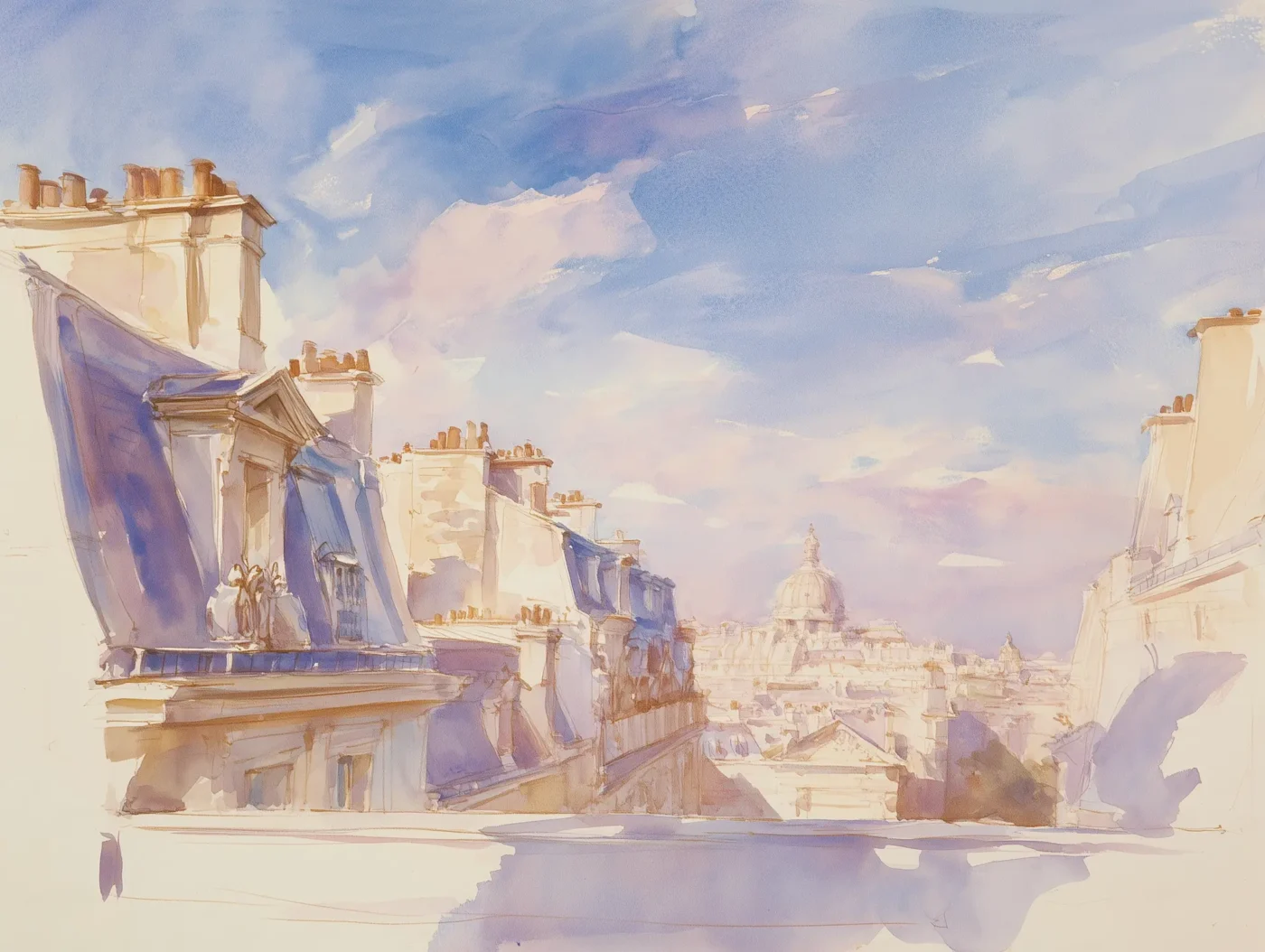
What does it truly mean to live “à la Française”? To me, it isn’t about a checklist of luxury items or a specific zip code. It is a fundamental shift in posture. In France, we often say we live in the être (to be) rather than the faire (to do) or the avoir (to have). Life doesn’t revolve around the climb; it revolves around the pause, the “apéro” with friends, the slow steam of a café crème, or a debate that lasts until the candles burn low.
As a native, I’ve realized that the French lifestyle is less a set of rules and more a collection of small, intentional rebellions against the rush of modern life. Here is how I’ve learned to embrace the art of living.
1. Become a Flâneur
To “flâner” is to stroll with no destination, yet with a very clear purpose: to observe. When I walk through Paris or Amsterdam, I try to channel Baudelaire’s “passionate spectator.” I don’t walk to get from A to B; I walk to witness the “ebb and flow” of the city. To be a flâneur is to be rooted in the present, finding immense joy in the infinite details of a limestone facade or the way light hits a zinc rooftop.
2. Practice Discretion
There is a quiet dignity in the French mantra: “Pour vivre heureux, vivons cachés” (To live happily, live hidden). In my experience, happiness is often found in the things we don’t post online. We tend to be reserved; we speak softly, we don’t overshare, and we value modesty. It’s not about being cold; it’s about protecting the intimacy of your own success and showing respect for those who may not share your luck.
3. Keep Money Private
Money is the one thing we rarely discuss at the dinner table. To me, this silence is a heritage, partly Catholic, partly peasant, that suggests profit shouldn’t be the loudest thing about a person. I find there is something incredibly refreshing about getting to know someone’s soul, their humor, and their ideas before ever knowing their salary.
4. Make Museums Part of Your Life
I grew up seeing museums not as cold institutions, but as extensions of our living rooms. Whether it’s the grand halls of the Louvre or a small neighborhood gallery, engaging with art is a common weekend pulse. When the state invests so heavily in culture, it becomes accessible to everyone, it’s our collective wealth, and we treat it as such.
5. Read Philosophy (Even Slowly)
In France, philosophy isn’t just for academics; it’s a mandatory rite of passage in school. It taught me the most important skill I own: intellectual freedom. To use one’s own reason, to question, and to contemplate. If you’re looking to start, I often return to the clarity of Camus’s The Fall or the sharp wit of Voltaire’s Candide.
6. Choose Real Conversation Over Small Talk
In London, I realized I didn’t miss the Eiffel Tower; I missed the “terrasse” debates. We often skip the small talk (bavardage) in favor of the “grande conversation.” No topic is too heavy or controversial. I love the friction of a good debate, it’s how we “refaisons le monde” (remake the world) over a bottle of wine.
7. Learn to Say “Non”
In many cultures, “no” is an ending. In France, it often begins one. From our history of protest to our daily interactions, a “non” is a way of setting boundaries and prioritizing needs. Learning to say “no” more often has saved me from burnout and allowed me to show up more authentically for the things that truly matter.
8. Accept the Art of Complaining
We aren’t just complainers; we are râleurs. For me, râler is a social tic, a way to bond over the imperfections of life. Whether it’s the weather or the government, sharing a small grievance is an act of authenticity. It signals that we aren’t naive; we know life isn’t picture-perfect, and there is a strange intimacy in admitting that together.
9. Value Authenticity
People sometimes mistake French honesty for rudeness, but I prefer to see it as a devotion to authenticity. We inherited a distaste for the “hypocrisy of the court” from the Revolution. I’ve learned that expressing an emotion truthfully, even if it’s a bit clumsy, is far more respectful than a polished, insincere smile.
10. Learn to Cook, Even Simply
French cuisine is our “intangible heritage,” but on a daily level, it’s about moderation and quality. I grew up with the theatricality of the meal, the maître d’hôtel spirit, even at home. It’s about the “Haute Cuisine” mindset: better ingredients, prepared with patience, served with pride.
11. Embrace the Apéritif
The apéritif is my favorite hour. It’s the bridge between the workday and the evening, a pre-dinner drink that resets the palate and the mind. It’s not about the alcohol; it’s about the transition. It’s a moment to exhale and say, “The work is done; now, we live.”
12. Protect Your Lunch Break
I am always amazed by the rush of lunch elsewhere. To me, lunchtime is sacred. It’s not a moment to “refuel” at a desk; it’s a 45-minute ritual of sitting down, usually with others. It’s a cultural exception that reminds us we are human beings, not machines.
13. Keep Sundays Sacred
Sunday in France feels different. The stores are mostly closed, the streets are quieter, and the “déjeuners dominicaux” (Sunday lunches) stretch lazily into the afternoon. It is a day dedicated to absolutely nothing but être (being). I’ve learned to cherish this forced pause; it’s the only way to truly recharge.
14. Approach Wellness Gently
I don’t believe in drastic health trends or punishing workouts. My approach to wellness is about “prendre soin de soi”, taking care of oneself through small, daily pleasures. It’s about accepting flaws as “charme” rather than fixing them. True beauty, I’ve found, comes from not trying quite so hard.
15. Live in the Être
If I could summarize my culture in one sentence, it’s this: Stop checking tasks off a list and start inhabiting the moment. When I sit on a terrace and feel the sun on my face, I don’t think about tomorrow. I simply say, “On est bien là”, we are good here.



I am American who was raised very Norwegian, who loves everything “France!” So happy I found you! I am 79 and wish I had an 80 year old friend in France to communicate with. I love the peaceful way you write. You are an exquisite lady!
I’m not sure how your blog found me but oh how it resonates. I spent a week in Paris in April this year as a solo traveler and I feel like I found my soul there. Sidewalk cafes, wandering and just absorbing the culture; it was perfection. I’m grateful to have found your writings as it’s like an exhale for my entire being. Thank you for bringing a little bit of France to my corner of the universe.
Thankyou so much for your wonderful blog. I am 81 and still love hearing about the French way of living. I have been to France 3 times and loved every minute. Coming from Australia I appreciated your beautiful architecture the lovely wide streets and the food. Have a wonderful wedding …. Just enjoy . Jilly
Chère Jilly, what a delight to receive your message all the way from Australia! It is truly an honor to know that you are reading along at 81. I am so glad you have such fond memories of our belles rues and the flavors of France, it is a joy to hear that our lifestyle continues to inspire you. Thank you from the bottom of my heart for your wedding wishes; I intend to savor every second of it. Merci infiniment.
Wise words, all! Merci!
Merci beaucoup, Mary Ellen! I am so pleased these habits resonated with you.
Lovely thoughts. Your thoughts always seem to put a touch of France in this Texan!
And from this Texan too, Thank you
Thank you Twila and Mimi! I love the idea of bringing a little piece of France to Texas! It is wonderful to see how the art de vivre transcends borders. Thank you for your kind words and for being part of this community.
I want to get on this blog. I loved it. I have French heritage.
Welcome, Mary Ann! It is lovely to connect with someone who shares French heritage. To make sure you never miss a post, do feel free to sign up for the free newsletter on the homepage. Bienvenue parmi nous !
I am 80 years old and enjoy your blog. I’ve been to France many times and enjoy every moment there…..lovely cenery,wines and the food! Did all the wine regions! What a feast!
Eighty years young and still celebrating the terroir! Your travels through the wine regions sound like a dream, Rita.
Your Friday newsletters are an “aperitif” between the working week and the weekend. Brava.
An aperitif, what a lovely way to put it, Janette. Merci. I hope this Friday’s edition is just as refreshing for you.
I so enjoyed taking the time to read this post carefully. The pleasure was intense. I lived in France for a period of time and you brought back to my consciousness so many delightful moments and memorable souvenirs of that wonderful time.
What a wonderful article. I’ve calmed down just by reading it this Friday evening and will now go and enjoy a Crémant before dinner. Thank you.
C’est vrai! Moi Aussie.
A glass of Crémant is the perfect way to mark the transition from the noise of the week to the peace of the weekend! Santé to you both for choosing a slow moment 🙂
I just want to say again how much I enjoy your blog. I may have been born in America, but my soul is French. I initially wandered Paris as a tourist, but came home different. Each return finds something new and refreshing. Especially as I age, I relate more and more to your words (many of them coming at the perfect time). I’m so glad I found this. Thank you.
Thank you so very much Robin, your words touched me deeply. One isn’t always born French; sometimes, one becomes it through a shared appreciation for the beauty in the small things. I am so happy you found your way here.
Thank you for this article! Being Canadian, the French lifestyle has always appealed to me, even though I live a in the Prairies, a long way from Quebec.
I love the French way of living. I’ve never been to France, but your philosophy makes so much sense! In a busy world, with so much to do, I’ve come to that place where peace and calm mean so much. Sitting for a couple hours with friends at the end of the day, sharing wine is key.
Thank you very much DJ! That peace and calm you’ve found, that is the real luxury. A glass of wine with friends is the best investment one can make.
Thank you very much, Jaime! The French spirit is a state of mind, whether you are in Paris or the Canadian Prairies. It is about the quality of the moment, no matter where your feet are planted 🙂
I am an American but I must have a French soul. So many of your recommendations resonate with how I already live and what I have prioritized my whole life. Living in the moment, talking about real things, being emotionally authentic, embracing a more philosophical understanding of life, siting back and just observing those around me, this is all natural to me but not so with so many other Americans. I really wish that when I meet someone for the first time the question “What do you do, or where do you work?”, could instead be “Have you read any interesting books lately, or seen any good films?”.
Thank you so very much Joy! I’m very happy to hear that these French lifestyle tips resonate with you. I agree; you took the words right out of my mouth! It’s so important to focus on what truly matters in life <3
I feel this also! It’s as if I’ve been in the wrong country all along. Everything makes more sense to me. Love this blog. So happy to have found this.
I thoroughly enjoyed your article and plan to incorporate some of the French ways of living into my own lifestyle. I’m excited to have subscribed to your newsletter.
Thank you!
Merci beaucoup Cynthia! And thank you for subscribing to the newsletter ♥️ I hope you love it 🙂
No wonder I am a francophile – these encapsulate my sensibilities perfectly! I’m excited to have found your newsletter. Thank you!
Thank you very much for your comment and for subscribing to the newsletter ♥️ I hope you enjoy it!
Simply devoured your words!!! Now wonder why my French Ancestors moved to America.
Thank You for writing this life comparison.
Hi, I enjoy your articles and wisdom. I am of french heritage and always dreamed of a life there I struggle finding recipes for the simple natural foods you speak of. The US is so commercial and processed.
Thank you very much, Judie! I know it can be a challenge, but remember: the French kitchen starts with the ingredient. Look for the simplest seasonal produce and let it speak for itself. I will certainly keep sharing more simple, unprocessed inspirations here.
I am delighted you devoured it, Joyce! Perhaps your ancestors brought that appreciation for life with them, and it is simply waking up in you now.
I really enjoyed this article – I’m American by birth but my personality, interests and style are so much more in tune with French culture. I hope to return to Paris sometime soon.
Merci beaucoup Liz! I hope you’ll be able to return to Paris soon <3
Wonderful article, very inspirational. I enjoyed reading it ❤
Thank you very much Desiree <3
I love your writing and must say, this one is my favorite and most inspirational. It is being printed as a daily reminder of how to embrace the day rather than hurry through checking off tasks. Thank you! Absolutely beautiful ♥️
Thank you so very much Beth ♥️ Merci infiniment!
Nice please add me to newsletter
Welcome to the community, Kathy! So happy to have you with us for our weekly rendez-vous.
Love this article thank you, saying ‘Non’ more often is definitely something we should all do.
Merci beaucoup Natalie! Yes, I agree with you. Saying “non” is not always an easy thing to do, but it can truly feel liberating 🙂
A great approach to life.
Thank you Tad <3
I really enjoyed the article very much! Will try to incorporate a few ideas into this fast paced American life of mine :)) xx
Thank you very much Theresa! Merci beaucoup xo
I love the saying, “All who wander are not lost.” I love wandering!
I love wandering as well, especially in a city like Paris, where there are so many beautiful things to see <3
Stumbled upon your blog and LOVE it!
Merci beaucoup Denise <3
I thoroughly enjoyed this article! Thank you so very much!
Merci beaucoup Pattie <3
Reading your blog is my (French) Sunday ritual! I think I will make the vegetable soup – it looks wonderful!
Merci beaucoup Rebecca <3
Have a lovely Sunday 🙂
C’est beau la vie. I loved the two decades of living in France, Normandy and Suresnes.
The arte, culture, etiquette maganafique.
Thank you very much for your comment! It’s good to hear that you enjoyed living in France! Normandy is a very beautiful region 🙂
Love the article. Love the french way of life. I want to live there.
Thank you Pattie 🙂
With a French mother and an American dad. I spent my growing up years in Europe. Happily enjoying those 4+ hours at holiday meals. We moved to the states when I was 17. Cultural shock indeed. I go back to France every 2-3 years. As an interior designer my mantra is surround yourself with the things you love. Buy original art and love it. Loved your article. I agree with everything you wrote. Well Done!
Thank you Suzanne <3
J’adore
Thank you Debra <3
I just stumbled on your blog and loved reading your post even though some didn’t apply to me as a guy. I’m teaching myself French and I’m a budding Francophile in the US. Looking forward to reading more! A Bientôt!
Thank you so much Steve <3
Thank you for sharing this information. I enjoy all things French/Paris. Looking forward to my next visit.
Thank you very much Yolanda <3
I’ve always been interested in the french lifestyle and living it! Everything about the Parisian culture and way of life is something i’ve always loved and connected with. So thankful that I have found your amazing article guide me! <3
Thank you Ari <3
Love your French Blog!. Lived in France, for two years when I was 13&14! Love everything French!!
Thank you Cynthia 🙂
Love your blog. Totally reading it and look forward to incorporating some of these tips.
Not eating a croissant might be hard for me, love all the French desserts.
Thank you Sherie <3
I love your blog! I am finding that as I get older I am being more drawn to the French way of life. It seems like a more natural way of living to me and my own personality. Merci beaucoup!
Thank you so much Lisa <3
I loved reading your article! I am definitely going to incorporate your tips in my daily life as I love the french style! Thank you so much for sharing your tips! merci beaucoup
Thank you Anouk for your feedback <3
Love the article! Im proud to say, this is my regimen! I love France and all it encompasses!
Thank you Ana <3