It Seems Léonce Chenal Is Haunted.
“Welcome to my house! Enter freely and of your own free will!”
— Bram Stoker, Dracula
Well, dear reader, it seems my suspicions were correct. Léonce Chenal is indeed a little haunted.
After a week of strange visitors and mysterious happenings, the doors are finally open.
Inside, I’ve gathered a few small pleasures for the Halloween weekend: a recipe for old-fashioned French chocolate caramels, a rather unreliable spell, music for the darker hours, a book best read after sunset, an old French mystery, and a few places worth getting lost in.
Nothing too terrifying, I promise. Just enough to make the ordinary feel a little extraordinary.
Do come in. And make yourself at home.
Amsterdam, 28 October 2026
Dear reader,
I have a particular fondness for Halloween. Which is perhaps a little curious, considering that it isn’t exactly a traditional French celebration.
But I’ve always loved this time of year. The shorter days, the first cold evenings, the pleasure of coming home to a warm, softly lit room. And just when autumn begins to feel a little too serious, along comes Halloween, with its ghosts, witches, old legends, and permission to be wonderfully unreasonable.
This year, though, I’ve found myself thinking about another October.
Almost ten years ago, I resigned from my job in Paris and decided to move to London, a city I had never even visited. Shortly afterwards, while I was still in Paris, I met the man who would become my husband. By January 2017, I was beginning a new life, with a new job, a new apartment, and very little idea of what awaited me.
It probably sounds rather reckless. Oddly enough, it felt like the most sensible thing in the world.
I remember that autumn with such affection. Perhaps because everything was about to change, although I didn’t quite know it yet. And perhaps because, for once, not knowing what came next was rather exciting.
Anyway, back to Halloween.
What I love isn’t really the horror. It’s the delicious possibility, for an evening or two, of imagining that the world might be a little more mysterious than we usually allow it to be. A creaking staircase, a strange noise in an empty room, a house with a history you’d rather not investigate after dark. All perfectly delightful, provided one can turn the lights back on.
We spend so much of our lives being sensible, responsible, and terribly grown-up. I rather like having an excuse, once a year, to believe in ghosts, entertain the most improbable stories, and indulge in a little harmless nonsense.
Perhaps we ought to take our imaginations a little more seriously, and ourselves a little less so.
And I love that Halloween comes just as the year begins to wind down. One last little celebration of autumn, before Christmas arrives and demands everyone’s undivided attention.
So, for this Halloween weekend, I thought we might enjoy a few of the stranger pleasures of the season. Nothing too terrifying, I promise. A little sweetness, a few delightful shivers, and perhaps the odd ghost.
After all, a little enchantment does us good from time to time.
Especially when we know perfectly well that magic doesn’t exist.
Or do we?
With love,
Léonce
P.S. A particularly affectionate thought to my readers in the UK. My years in London gave me so many happy memories, and I still dream of returning to explore more of Britain, especially Scotland. I’d happily lose myself in Edinburgh’s wonderfully mysterious streets all over again.
Shall we begin?
A little drama, a few dark waltzes, and melodies that seem to know more than they should. For candlelit evenings, old ghost stories, and the delicious pleasure of being just a little afraid.
Trick or Treat?
Now, it wouldn’t be Halloween without a little something sweet. Or a little mischief.
I couldn’t quite decide which to offer you, so I’ve prepared both: a recipe for old-fashioned French chocolate caramels, and a small spell for those evenings when ordinary life could do with a touch of magic.
You may choose one, of course. Although I see no reason not to indulge in both.
Les Caramels de Minuit
A little French confection for the witching hour.
I have a weakness for old French cookbooks, particularly those that seem to assume their readers already know rather more about pastry-making than I do.
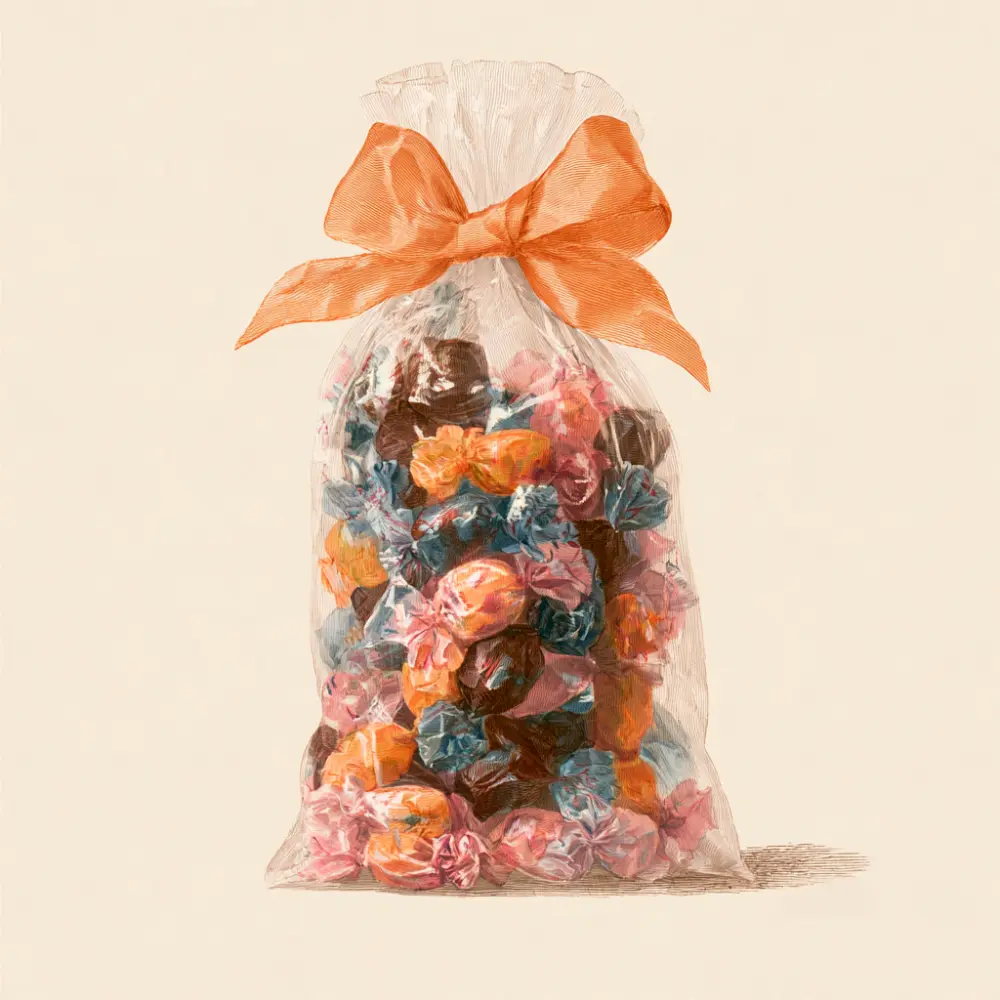
While leafing through a pâtisserie book published in 1906, I came across a recipe for caramels mous au chocolat (soft chocolate caramels). Naturally, I had to try making them.
I’ve adapted the idea for a modern kitchen, with just a handful of ingredients and no need for a sugar thermometer. The result is a wonderfully rich, chocolatey caramel, soft enough to give a little when you bite into it, but firm enough to wrap in small squares of paper.
I suggest making them the evening before. They need a little time to set, and besides, there is something rather pleasing about leaving a tray of chocolate caramels to work their magic overnight.
Ingredients
Makes approximately 25–35 small caramels, depending on how you cut them.
200 g granulated sugar
40 ml water
150 g heavy whipping cream
100 g dark chocolate, preferably around 50–60% cocoa, finely chopped
35 g unsalted butter
A small pinch of fine sea salt
Method
Line a small loaf tin or rectangular dish, approximately 20 × 10 cm (8 × 4 inches), with parchment paper.
Warm the cream gently in a small saucepan. It should be hot, but doesn’t need to boil.
Place the sugar and water in a heavy-bottomed saucepan over medium heat. Let the sugar dissolve, then cook without stirring until it turns a beautiful amber colour. You can gently swirl the pan if needed.
Remove the saucepan briefly from the heat and carefully add the warm cream, a little at a time. The mixture will bubble up quite dramatically, so do take care. Stir until smooth.
Add the chopped chocolate, butter, and salt. Return to low heat and stir gently until everything has melted together.
Continue cooking, stirring frequently, until the mixture thickens enough to form a soft, pliable ball when a little is dropped into a glass of very cold water. It should hold together once cooled, rather than dissolve into the water.
Pour into the prepared tin and leave to cool completely. Allow several hours, or preferably overnight, for the caramels to firm up.
Cut into small squares with a lightly buttered knife. Wrap individually in pieces of waxed or greaseproof paper.
They make rather lovely little Halloween offerings. Although I should warn you that it’s remarkably easy to make several disappear before you’ve finished wrapping them.
A Charm Against Excessive Seriousness
From a most unreliable book of spells.
It has come to my attention that excessive seriousness is a rather common affliction. I suspect I may have suffered from it myself.
Fortunately, I believe I have discovered a remedy.
You will require one quiet evening, a candle, a book containing something improbable, and a small quantity of chocolate. The latter is essential. I wouldn’t dream of attempting magic without it.
Wait until the house has grown quiet.
Light the candle.
Put aside anything remotely useful.
Open the book, preferably at a page you haven’t read before.
Now, for a few minutes, entertain the possibility that something quite extraordinary might happen.
Should a floorboard creak, consider it a promising sign.
Should nothing happen, eat the chocolate.
Should the spell fail, try again tomorrow.
Should it succeed, I would appreciate being informed.
To be Read After Dark
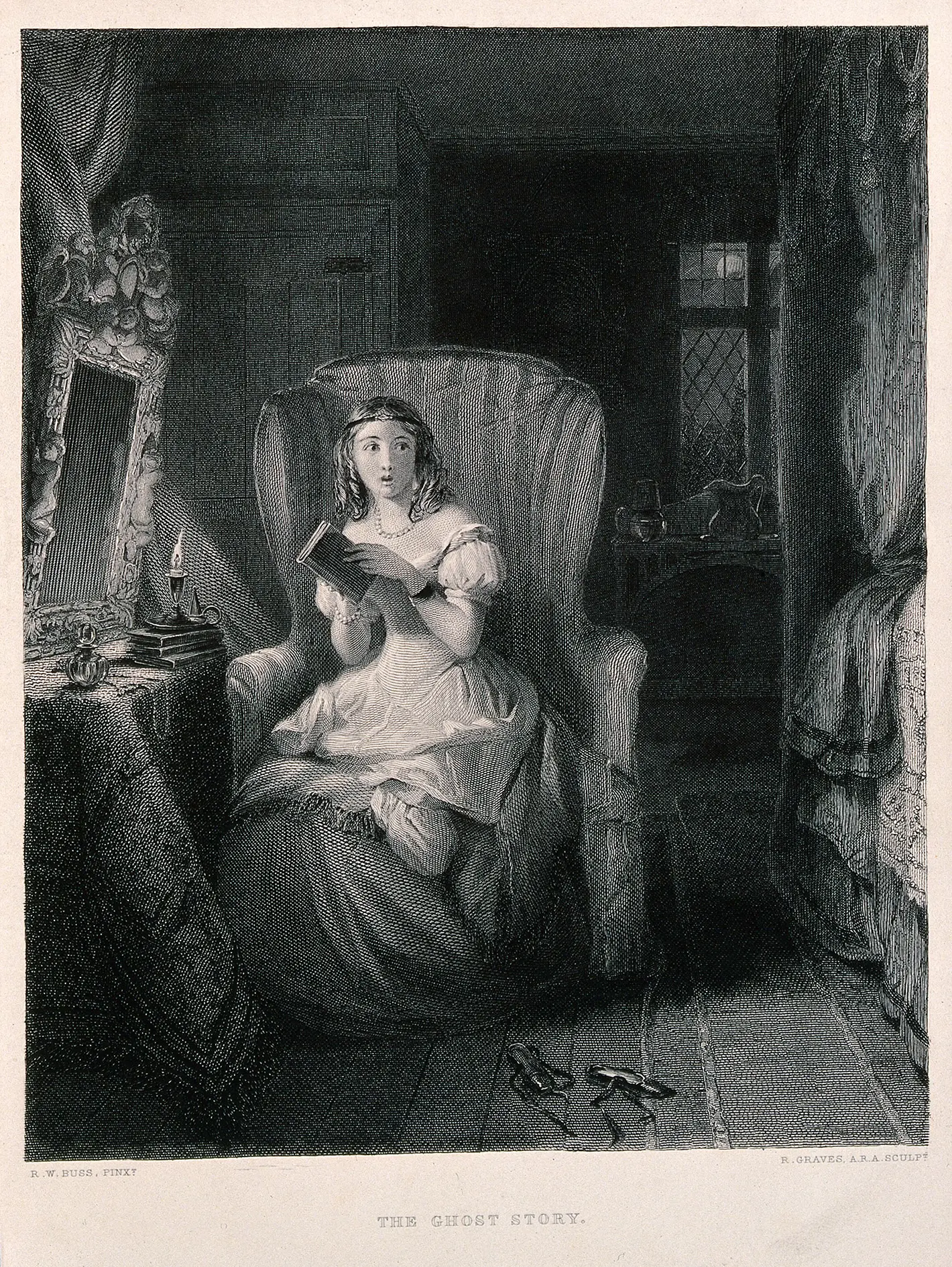
I think I may have become so terribly serious that, somewhere along the way, I forgot the simple pleasure of reading a book just to disappear into a good story.
And Dracula, by Bram Stoker, has reminded me how wonderful that can be.
Told through letters, diaries, and newspaper clippings, this Gothic novel draws you in from the very first pages. I’ve become so absorbed in it that I find myself wondering, in the middle of an ordinary afternoon, how on earth poor Jonathan Harker is going to escape that castle.
And then I look forward to the evening just to find out.
Perhaps you know the feeling?
If you haven’t read Dracula, I can’t think of a better time to begin. Wait until nightfall, settle into a comfortable chair, light a candle, and let the story do the rest.
And should you hear a strange noise while reading, I’m sure it’s nothing. Probably.
Beware of the Beast
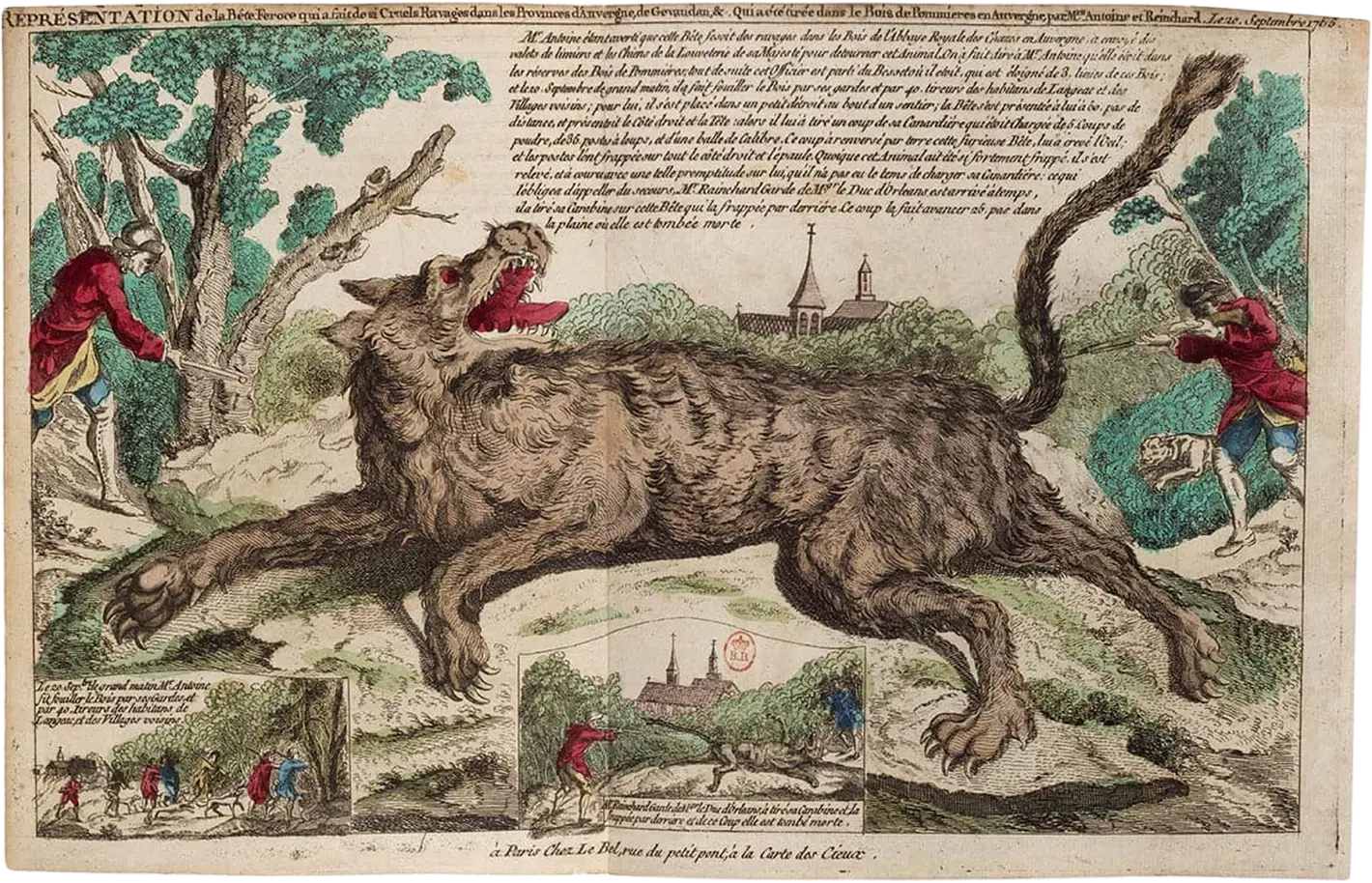
An old French mystery, best enjoyed from a safe distance.
Some stories sound as though they belong in a book of fairy tales. A mysterious creature roaming the countryside, terrified villagers, a king sending his finest hunters to catch a monster. Except this one really happened.
In the summer of 1764, in a remote corner of southern France, something was attacking people. The first officially recorded fatal victim was a young shepherdess named Jeanne Boulet, killed near the borders of the old province of Gévaudan. More deaths followed, often among children and young people tending livestock in the fields. Soon, the surrounding villages were living in fear.
And then came the descriptions. Some witnesses spoke of an enormous wolf. Others insisted it was unlike any wolf they had ever seen: unusually large, with reddish fur, a dark stripe along its back, and a fearsome jaw. Whatever it was, the creature soon acquired a name. La Bête du Gévaudan. The Beast of Gévaudan.
As the attacks continued, the rumours grew wilder. Was it a particularly savage wolf? An exotic animal escaped from somewhere? Or something altogether less natural? There was talk of werewolves, divine punishment, and a creature that seemed impossible to kill. The story travelled through the newspapers, eventually reaching the court of Louis XV. Even the king became involved.
Hunters were dispatched, expeditions organised, and in September 1765, François Antoine, the king’s own gunbearer, killed a large wolf. The animal was sent to Versailles, where it was presented as the long-sought Beast. The nightmare, it seemed, was finally over. Except it wasn’t.
By December, the attacks had begun again. It would take almost another two years before a local hunter named Jean Chastel killed a wolf-like animal on 19 June 1767. This time, the attacks attributed to the Beast came to an end.
But what exactly had been roaming those mountains for three years? The most convincing historical explanations point towards wolves, perhaps several of them. Yet the conflicting eyewitness descriptions, the extraordinary number of attacks, and the confusion surrounding the hunts have left plenty of room for speculation.
And folklore has never been particularly interested in leaving a good mystery alone. According to a later legend, Chastel killed the Beast with a silver bullet, the sort traditionally associated with werewolves. There is no reliable contemporary evidence for this rather theatrical detail, but I must admit it makes a splendid ending to the story.
The truth, of course, is considerably sadder. Behind the legend were real people, real villages, and years of very real fear. And perhaps that is what makes the Beast of Gévaudan so unsettling. The monster may have grown larger and stranger with every retelling, but the events that gave rise to it were not imaginary.
More than 260 years later, the creature’s exact identity remains uncertain, and its legend is still very much alive. Should I ever find myself walking through the forests of Gévaudan after sunset, I think I might take the longer way home. Just in case.
A Little Atlas of the Uncanny
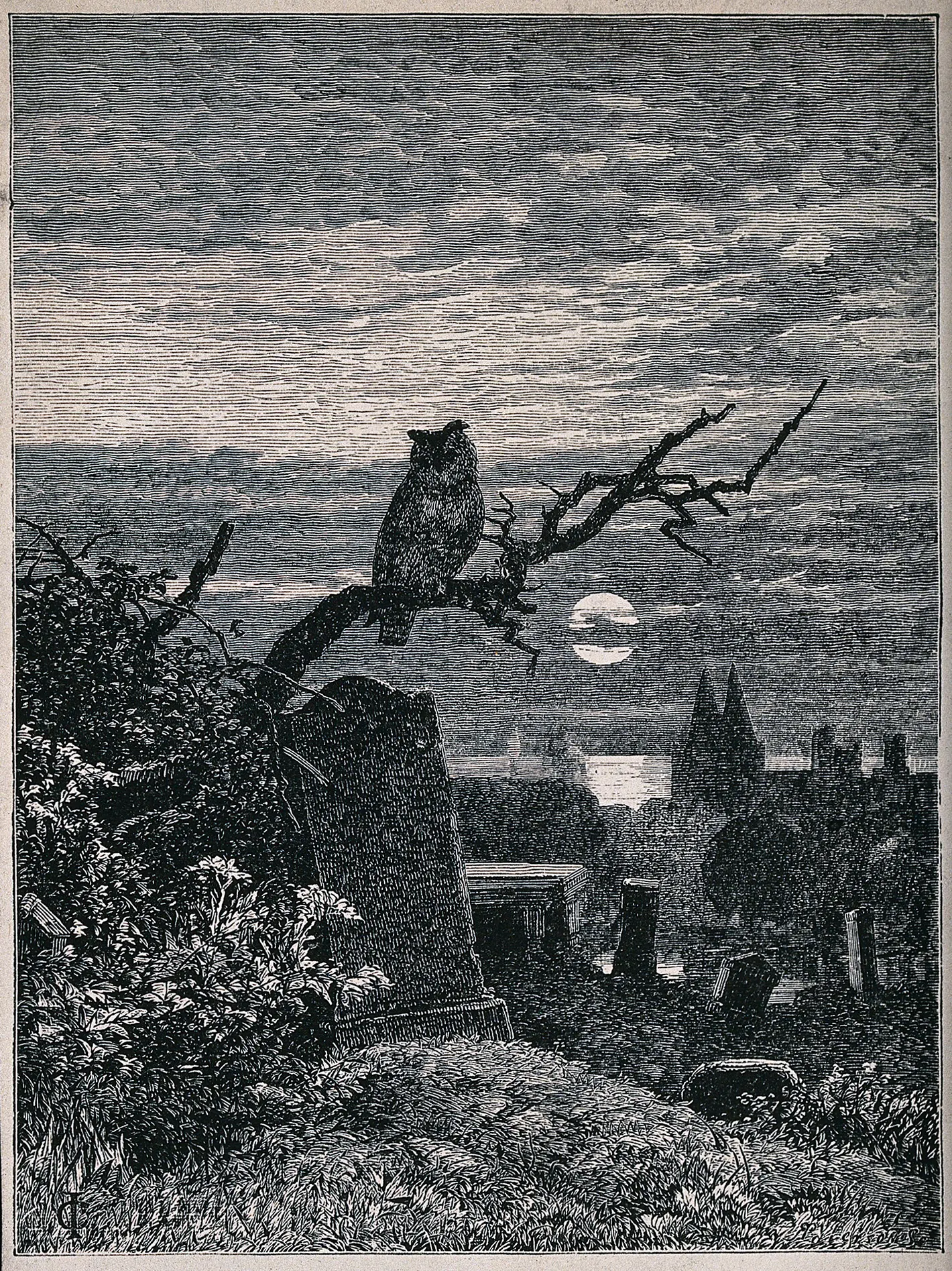
Some places have a peculiar way of making the past feel rather more present than one might expect. A staircase descending beneath an ordinary city street, a castle above a forest, an old doorway that seems to be keeping a secret.
For those who enjoy a little mystery with their travels, I’ve gathered three places where history and legend make particularly interesting companions. Whether any of them are actually haunted, I shall leave you to decide.
Paris · The Catacombs
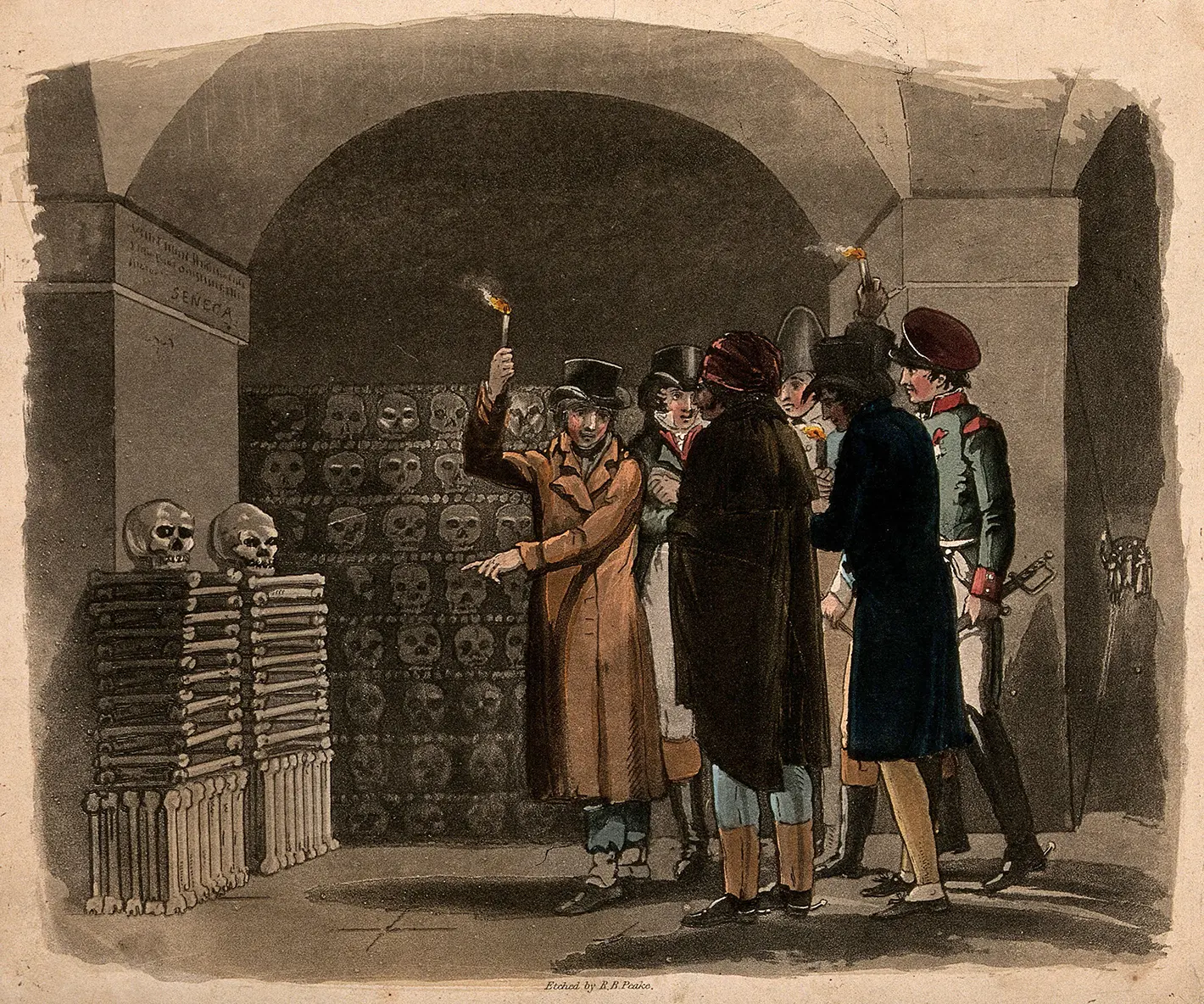
Paris has many secrets, but some of its most extraordinary are buried twenty metres beneath the streets.
In the late eighteenth century, overcrowded cemeteries led the authorities to transfer the remains of millions of Parisians into former limestone quarries. Today, visitors can descend into the Catacombs, where long underground passages lead to walls carefully arranged with skulls and bones.
It is a strange and rather humbling place, particularly when you remember that, above you, Paris is going about its usual business: cafés filling, taxis honking, and someone undoubtedly complaining about the weather.
Transylvania · Bran Castle

After spending so many evenings in the company of Bram Stoker’s Dracula, I couldn’t possibly leave Transylvania out of this little atlas.
Perched above a wooded valley, with its pointed towers, narrow staircases, and medieval stone walls, Bran Castle looks almost suspiciously like the sort of place in which a vampire might choose to live.
It is often called Dracula’s Castle, although there is no firm evidence that Stoker used it as his inspiration. Its actual history is fascinating enough: a medieval fortress that later became a beloved residence of Queen Marie of Romania.
Still, I imagine it would be rather difficult to stand before those towers on a misty autumn evening without thinking of Count Dracula. Personally, I would make certain to leave before nightfall.
Edinburgh · The Old Town
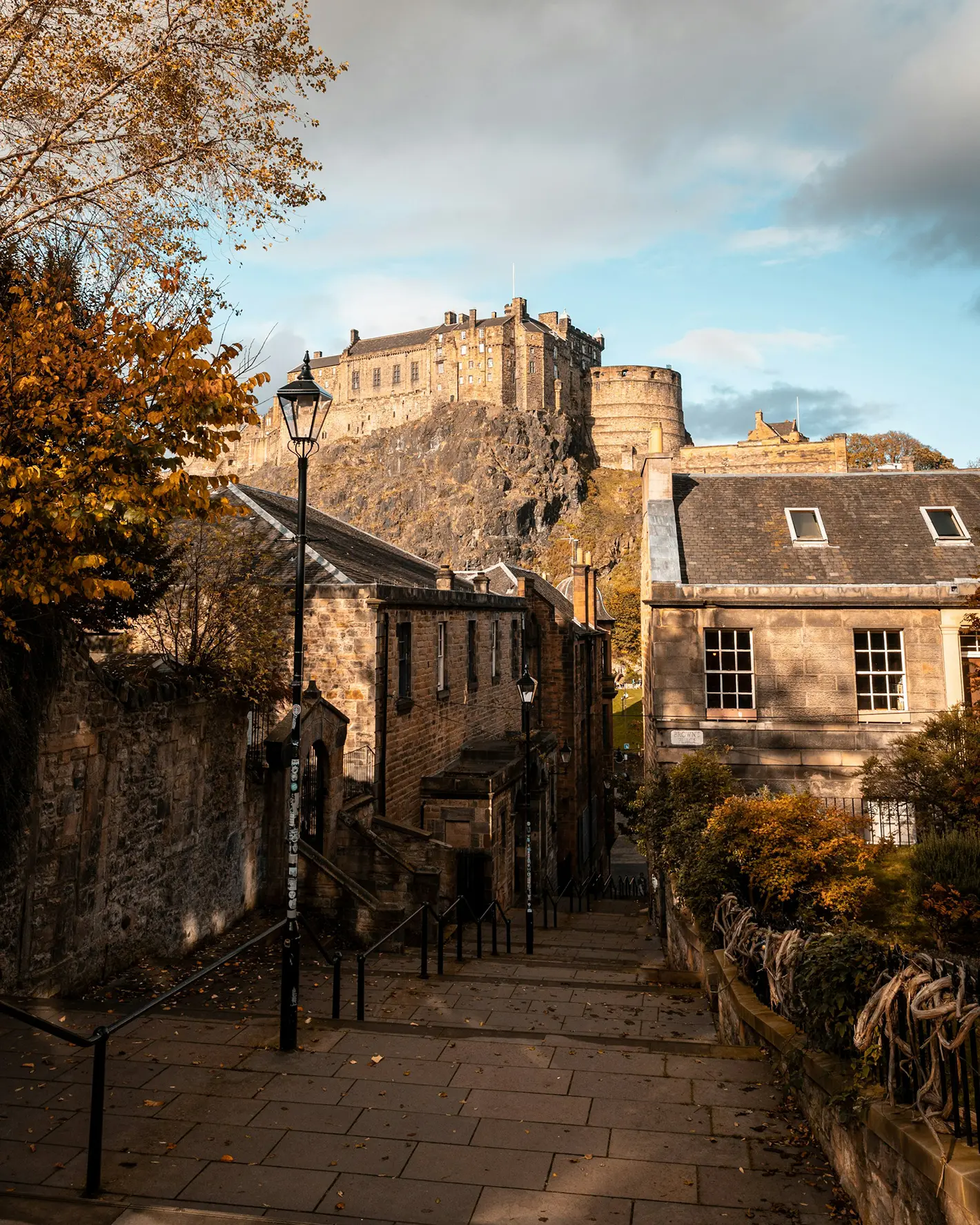
Edinburgh is one of those cities I would happily return to again and again. I loved its old stone buildings, its narrow staircases, and the feeling that another century might be waiting just around the corner.
The Old Town is a little labyrinth of closes and wynds, those wonderfully Scottish names for the narrow passages and lanes that wind between centuries-old buildings. Some are barely more than a flight of steps; others lead to hidden courtyards or unexpected glimpses of the city below.
With its dark stone, dramatic skyline, and famously changeable weather, it doesn’t take much imagination to picture a ghost or two.
And so, dear reader, we’ve come to the end of our little wander through the stranger side of things.
I hope you’ve found something to enjoy this Halloween weekend. A story to disappear into, something sweet to make, or perhaps a good excuse to let your imagination run away with you.
As for me, after spending the past few days preparing this rather peculiar little Halloween edition, I’ve managed to catch a cold. Apparently, inviting ghosts into one’s house is perfectly harmless. It’s the autumn viruses one ought to be afraid of.
So I intend to spend the evening with a book, a few chocolate caramels, and the firm conviction that every mysterious noise in the house has a perfectly reasonable explanation.
Thank you for visiting this rather unusual corner of Léonce Chenal. I hope you’ve enjoyed your stay. And don’t be too surprised if the house has a few more secrets to reveal before the year is over. I’ve been having one or two ideas…
Until then, do take care of yourself. As I’ve recently discovered, not all unwelcome visitors are supernatural.
With love,
Léonce
A Little More French Style?
For something rather more practical, this week’s Édit Privé is all about getting dressed for colder days. I’ve gathered seven French outfit formulas you can recreate with pieces you probably already own, for mornings when you’d rather not spend twenty minutes negotiating with your wardrobe.
Read this week’s Édit with a 7-day free trial, and explore the complete archive of 60+ private Édits.